
How High to Hang a TV in the Bedroom for the Best Viewing Experience

Mounting a TV in your bedroom isn’t just about enhancing the room’s visual appeal—it plays a much bigger role in delivering a comfortable and immersive viewing experience. It’s about more than aesthetics; it’s about achieving the right blend of functionality and relaxation. Whether you’re binge-watching your favorite series, replicating a cinematic experience at home, or simply enjoying a cozy night in bed, the height at which the TV is mounted significantly affects your comfort. Ensuring the correct TV mounting height is essential for reducing strain and maximizing enjoyment.
In this guide, we’ll explore how to determine the ideal TV placement that suits both your bedroom setup and personal viewing habits.
The Importance of TV Mounting Height
If you’ve ever dealt with neck pain or eye discomfort while watching TV, there’s a good chance the positioning of your screen was to blame. Tilting your head up or constantly shifting it downward is a clear sign that your TV isn’t mounted at the right height.
This is why the TV mounting height plays such a vital role in your overall viewing experience. When your TV is mounted either too high or too low, it disrupts your posture and leads to unnecessary strain, turning what should be a relaxing time into a physically uncomfortable one.
The ideal solution is to install your TV at eye level, whether you’re sitting upright or lying down in bed. This placement ensures that your viewing experience remains comfortable, ergonomic, and enjoyable, no matter how long you’re watching.
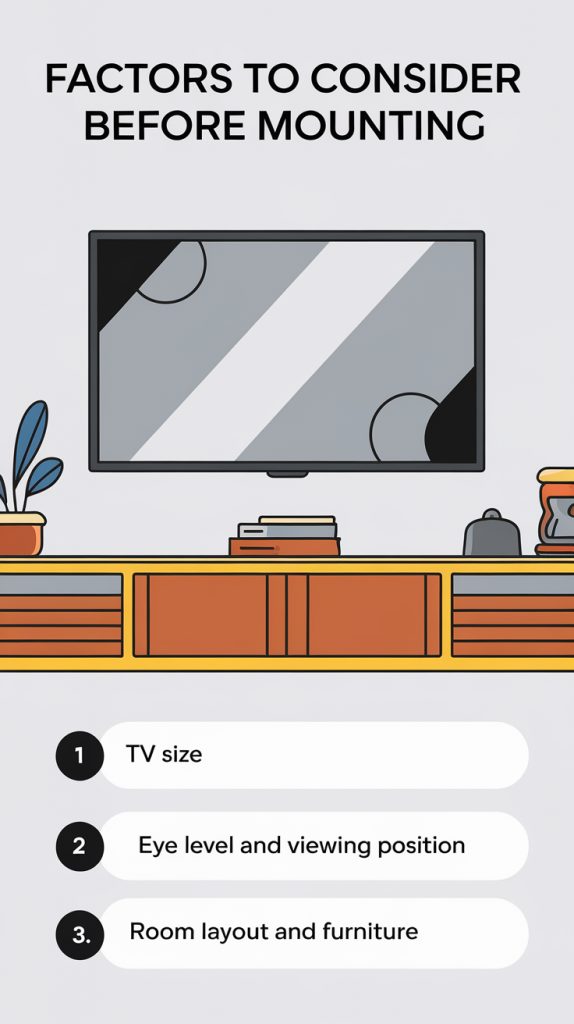
Factors to Consider Before Mounting
1. TV Size
The size of your TV screen plays a major role in deciding how high it should be mounted on the wall. Generally, larger screens tend to be placed higher, but this isn’t a hard rule—it’s all about maintaining a proper balance between screen height and viewing distance. Bigger TVs often demand a slightly elevated position to ensure a clear and comfortable line of sight, especially when viewed from across the room.
However, it’s equally important that the viewer is seated or lying at a sufficient distance to fully enjoy the display without straining the eyes. Finding the right combination of TV size, mounting height, and room layout is key to achieving the best possible viewing setup.
| TV Size (inches) | Recommended Height from Floor to Center of Screen (inches) |
|---|---|
| 32-49 | 28-35 |
| 50-55 | 30-42 |
| 65+ | 42-65 |
2. Eye Level and Viewing Position
Eye level is a critical factor when it comes to creating a comfortable and ergonomic viewing experience. No matter if you’re sitting upright in a chair or reclining back on your bed, your eyes should align naturally with the center of the TV screen. This alignment helps prevent the need for constant head movement, whether that means tilting your head up or glancing down, both of which can lead to unnecessary strain.
By ensuring that the center of the screen matches your natural eye level, you not only enhance your overall comfort but also allow for longer, more enjoyable viewing sessions without discomfort or fatigue.
3. Room Layout and Furniture
If you’re planning to mount your TV above a piece of furniture, such as a dresser or console table, it’s important to take the height of that furniture into account. The bottom edge of the TV should ideally sit about 3 to 4 inches above the top of the furniture. This small gap helps prevent any visual obstruction and ensures the screen remains fully visible from your seating or lying position.
On the other hand, if your goal is to make the TV a focal point in the room, consider centering it symmetrically on the wall. This approach not only creates visual balance but also complements a clean and organized interior layout, especially in more modern or minimalist bedroom designs.
How to Calculate the Perfect Height
To determine the most accurate height for mounting your bedroom TV, follow a few simple steps that consider both comfort and viewing efficiency:
1. Determine your eye level: Begin by sitting or lying in your usual viewing spot—this could be your favorite side of the bed or your regular lounging position. The goal is to find the natural height of your eyes when you’re relaxed, as this will serve as a guide for where the center of the screen should be.
2. Adjust based on bed height: The height of your bed plays a key role. If you have a taller bed or a thicker mattress, you’ll likely need to position the TV a bit higher to align it with your eye level. Conversely, for lower beds, the screen should be mounted slightly lower to maintain the same level of comfort and visual alignment.
3. Consider the viewing angle: Ideally, the vertical viewing angle should fall within the range of 10 to 15 degrees downward from your line of sight. This range helps prevent eye strain and keeps your neck in a neutral, relaxed position while watching, whether you’re enjoying a quick show or an entire movie marathon.
| Viewing Angle (degrees) | Comfort Level |
|---|---|
| 0-10 | Excellent |
| 10-15 | Good |
| More than 15 | Risk of neck strain |
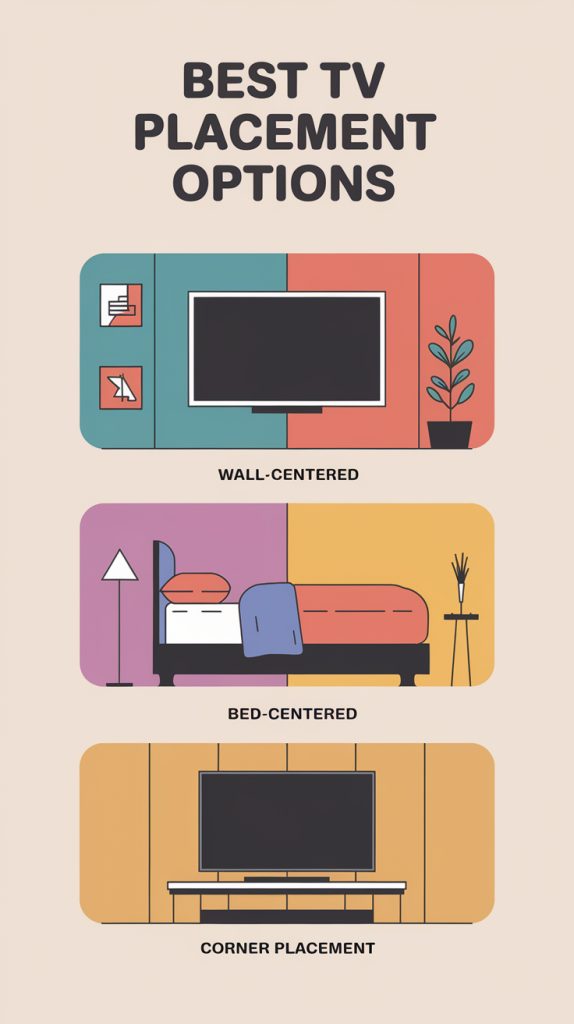
Best Placement Options
Wall-Centered
A symmetrical layout is often the top choice for interior designers who prefer a clean, balanced aesthetic. Placing the TV in the center of the wall not only aligns with the room’s symmetry but also creates a focal point that naturally draws the eye.
This central wall-mounting approach enhances the overall visual harmony of the bedroom, ensuring that the TV remains the center of attention without disrupting the room’s design flow. It’s a great option for those who value both functionality and style in their bedroom setup.
Bed-Centered Placement
Mounting the TV directly across from the bed is often the most convenient and viewer-friendly setup, particularly in bedrooms where most screen time happens while lying down. This arrangement allows for a direct, comfortable line of sight, reducing the need to twist or tilt your head.
It’s a practical choice for those who enjoy watching TV primarily from bed, offering a relaxed and immersive viewing experience without compromising on comfort or room design.
Corner Placement
Corner mounting is a smart solution, especially in bedrooms that are narrow, long, or have limited wall space. Utilizing the corner helps free up central wall areas for other decor or furniture, and with the right angle, it can still provide an excellent viewing experience.
For wider corners, this placement offers flexibility and can even enhance the room’s spatial layout by making better use of an often overlooked area.
Choosing the Best Placement
Each mounting option offers its own advantages depending on your bedroom’s layout and your viewing habits. Wall-centered mounting creates a visually balanced focal point and works well in symmetrical rooms. Bed-centered positioning maximizes comfort for those who frequently watch TV while lying down.
Meanwhile, corner mounting is ideal for optimizing space in long or compact bedrooms. Selecting the best placement ultimately comes down to balancing design preferences with practical viewing comfort.
| Mounting Type | Description | Best for |
|---|---|---|
| Wall-Centered Mounting | TV is centered on the wall for a balanced look. | Symmetrical rooms |
| Bed-Centered Mounting | TV is mounted directly opposite the bed for direct viewing. | Most practical for watching from bed |
| Corner Mounting | TV is mounted in the corner for optimal use of space. | Narrow or long rooms |
How Far Should You Sit From Your TV?
The distance between your bed and the television plays a crucial role in achieving the most comfortable and enjoyable viewing experience. Sitting too close can strain your eyes, while sitting too far may make it hard to catch finer details. A commonly recommended rule of thumb is to sit at a distance that is approximately two to three times the height of your TV screen.
This guideline helps ensure that the screen appears large enough to fill your field of view without causing visual discomfort. By maintaining this ideal distance, you can enhance your overall entertainment experience, whether you’re watching movies, shows, or simply relaxing with some background visuals.
| TV Size (inches) | Recommended Viewing Distance (inches) |
|---|---|
| 32 and below | 56-84 |
| 40 | 70-88 |
| 50 | 68-93 |
| 65 and above | 90-108 |
Conclusion
To sum it up, determining the ideal height for hanging your bedroom TV isn’t a one-size-fits-all approach—it depends on a mix of factors like your TV’s screen size, the height of your bed, and the overall layout of your bedroom. However, a reliable guideline is to mount the TV so that the center of the screen sits approximately 42 to 50 inches above the floor.
This height typically aligns well with your eye level when you’re sitting or lying down, promoting both visual comfort and aesthetic appeal. It’s important to make adjustments based on your specific room setup and personal viewing habits.
And if you’re ever uncertain or dealing with a more complex layout, don’t hesitate to consult a professional for tailored advice that ensures both function and design are in harmony.
FAQs
1. What is the ideal mounting height for a 55-inch TV in the bedroom?
For a 55-inch television, the recommended mounting height is typically between 26 to 30 inches from the floor to the center of the screen. This range offers a comfortable viewing experience when lying or sitting in bed. However, it’s wise to fine-tune the height slightly depending on your bed’s elevation and the overall layout of your room.
2. Is it okay to mount my TV above a dresser?
Yes, you can definitely install your TV above a dresser. Just make sure there is a gap of at least 3 to 4 inches between the top of the dresser and the bottom of the screen. This spacing prevents the dresser from obstructing your view and ensures that the center of the TV screen remains aligned with your eye level while you’re watching.
3. How far should my bed be from the TV for optimal viewing?
The recommended viewing distance is generally two to three times the height of your TV. For example, with a 50-inch TV, sitting about 68 to 93 inches away from the screen will help maintain picture clarity and comfort, making it easier on your eyes during long viewing sessions.
4. Will mounting a TV too high on the wall hurt my neck?
Mounting a TV too high can indeed lead to neck strain, especially if you have to constantly tilt your head upward to watch. To avoid this discomfort, aim to position the screen so that its center aligns with your eye level when you’re in your typical viewing position. This ensures a relaxed and ergonomic viewing angle.


