
Why Does My Laundry Room Smell Like a Sewer?

Have you ever stepped into your laundry room expecting the clean, crisp scent of freshly washed clothes, only to be greeted by a foul, sewer-like odor instead? It’s not just unpleasant—it can be downright frustrating. This kind of experience is surprisingly common and can turn what should be a simple, routine task into one of the most dreaded chores of the week.
Even more concerning, though, is the possibility that this awful smell isn’t just lingering in the air for no reason. In many cases, it’s actually a warning sign of something more serious—like underlying problems with your home’s plumbing or ventilation system. That’s why, in this article titled “Why Does My Laundry Room Smell Like a Sewer,” we’re diving deep into the root causes of this issue. We’ll also share some practical, do-it-yourself strategies that can help you tackle the smell and restore freshness to your space.
Let’s dive in!
Common Causes of Sewer Smell in the Laundry Room
The unpleasant odor wafting through your laundry room is more than just a nuisance—it’s a clear indicator that something behind the scenes isn’t functioning as it should. While several potential culprits could be responsible for the sewer-like smell, one of the most common offenders is a clogged drain. Blockages in the drainage system are known to trap stagnant water and organic debris, which eventually begin to emit foul odors.
In the following sections, we’ll take a closer look at this and other possible causes, helping you understand exactly why does my laundry room smell like a sewer and what you can do about it.
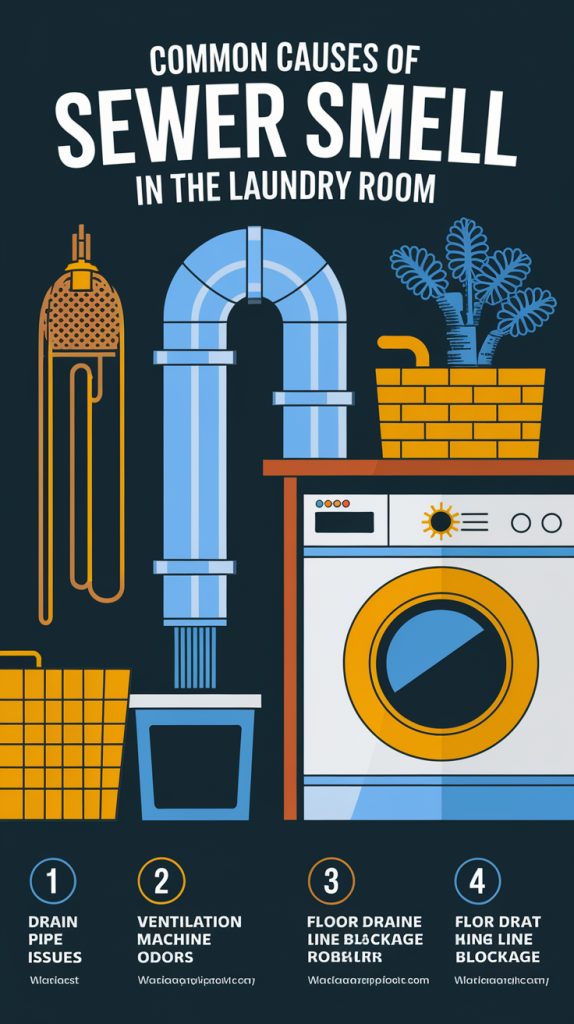
1. Drain Pipe Issues
One of the most prominent causes behind the persistent odor in your laundry room can be traced back to issues within your drain pipes. These pipes often become a hotspot for unpleasant smells, especially when they accumulate lint, fabric particles, soap scum, and other waste residues. Over time, this buildup can restrict water flow, leading to stagnation. Stagnant water inside the drain system becomes a breeding ground for bacteria, which in turn produces the foul, sewer-like smell that can take over your space.
Another frequent issue is a dry P-trap. The P-trap is a curved, U-shaped section of pipe located beneath the floor drain that serves a crucial purpose—it traps a small amount of water to block sewer gases from entering your home. However, if this water evaporates due to infrequent use, it loses its seal, allowing those unpleasant gases to escape and spread throughout your laundry room.
Typical indicators that you might be facing drain pipe problems include:
- Water draining more slowly than usual
- Gurgling or bubbling sounds coming from the drain
- Intermittent yet strong sewer odors that come and go
These are warning signs you shouldn’t ignore, especially if you’re asking yourself, “why does my laundry room smell like a sewer?”
2. Ventilation Problems
Poor ventilation is another major contributor when you’re wondering why does my laundry room smell like a sewer. The ventilation system plays a critical role in regulating air quality and moisture levels in the space. If the venting is either improperly installed or blocked by dust, lint, or debris, it can trap humid air and odors inside. Over time, this can result in the entire room smelling like an open sewer, making it uncomfortable and unhygienic.
A well-designed laundry room should allow air to flow freely, helping to remove moisture, heat, and gases produced during washing and drying cycles. One highly effective feature for ventilation is a skylight, which not only brings in natural light but also allows trapped air to escape. On the other hand, cracked ducts or completely neglected ventilation systems can lead to excessive humidity and promote mold growth.
To better understand the contrast, here’s a quick comparison:
- Proper Ventilation: No lingering odors, smooth air circulation, and a dry, fresh environment.
- Improper Ventilation: Accumulating bad smells, increased mold risk, and damp, stale air.
Good airflow is essential not just for comfort, but for maintaining a healthy and odor-free laundry room.
3. Washing Machine Odors
In some cases, the foul odor in your laundry room may not be coming from the plumbing or ventilation systems at all—it could be originating from your washing machine itself. This is a surprisingly common issue, especially in machines that frequently operate on cold water cycles. Cold water doesn’t kill bacteria as effectively as hot water, which means mold and mildew can easily develop inside the drum over time.
Moreover, detergent residue often accumulates in various parts of the machine, particularly the detergent drawer and the internal hoses. This buildup can trap moisture and lead to the formation of a musty, almost septic odor that gradually fills the room. These smells can be misleading, making you wonder why does my laundry room smell like a sewer, when the real culprit is actually the appliance you’re using to clean your clothes.
To check if the washing machine is the source of the smell, inspect the following areas:
- Look for visible mold or mildew growth inside the drum.
- Examine the detergent drawer for soap scum or hardened buildup.
- Check the hoses for stagnant water or lingering detergent remnants that could be causing the odor.
Addressing these areas regularly can go a long way in keeping your laundry room fresh.
4. Floor Drain and Sewer Line Blockage
In some situations, the reason why does my laundry room smell like a sewer might be tied to more serious underlying issues, such as a blocked floor drain or an overflowing main sewer line. When the floor drain becomes clogged, it prevents wastewater from draining properly, causing it to back up and release a strong, unpleasant odor that can quickly fill the room. This type of blockage creates a smoggy, stale indoor atmosphere that’s hard to ignore.
Even more concerning is when the main sewer line is obstructed. A choked sewer line can force raw sewage and gases back into your home’s plumbing system, pushing them through your drains and causing foul smells in multiple areas—not just your laundry room. In extreme cases, untreated sewer backups pose health hazards due to the presence of harmful bacteria and toxic fumes.
Watch for these warning signs that may indicate your floor drain or sewer line is compromised:
- Pooled or standing water around the floor drain
- Sewage backing up into sinks, bathtubs, or other plumbing fixtures
Addressing these signs promptly is crucial to maintaining a safe, sanitary home environment.
How to Identify the Source of the Odor
Before you can effectively eliminate the odor, the first and most important step is identifying its exact source. Pinpointing what’s causing the stench is key to determining the right solution—especially if you’ve been wondering why does my laundry room smell like a sewer. Here are some practical steps you can take to trace the origin of the smell:
- Visual Inspection: Carefully examine the visible components of your laundry area, including the washing machine, nearby pipelines, and drain joints. Look for signs of mold, grime, pooled water, or any residue buildup that may be a clue to where the smell is coming from.
- Follow Your Nose: Instead of guessing, rely on your sense of smell to guide you. Move around the room and sniff near areas like floor drains, the washing machine, and ventilation outlets. This will help you zero in on the most affected zones.
- P-Trap Water Test: If your floor drain smells particularly bad, pour a gallon of water into it. If the smell disappears shortly afterward, it likely means the P-trap was dry and sewer gases were escaping through the drain.
- Ventilation Check: Evaluate the condition of your laundry room’s ventilation system. Make sure vents are not clogged or damaged, as poor airflow can trap moisture and odors inside the space.
By methodically checking each of these areas, you’ll get closer to solving the mystery behind the unpleasant smell—and create a fresher, more breathable environment in your laundry room.
DIY Solutions to Remove the Sewer Smell
Once you’ve successfully identified the root cause of the smell, it’s time to take action with some simple yet effective DIY methods. These hands-on techniques are not only cost-effective but can also be surprisingly satisfying to do yourself. Whether the issue stems from a clogged drain, stale air, or a smelly appliance, these strategies will help eliminate the marshy, sewer-like odor and restore a clean, fresh scent to your laundry space.
So, let’s dive into some practical solutions and see how you can tackle the question of why does my laundry room smell like a sewer head-on—all without calling in a professional just yet.

1. Clearing Blocked Drains
To clear a blocked drain and eliminate the odor at its source, you have a couple of reliable DIY options. For tougher clogs, using a plumber’s snake is a great way to physically break up and remove debris that’s accumulated deep within the pipes. Alternatively, a chemical drain cleaner can help dissolve built-up grime, though it should be used sparingly and according to the manufacturer’s instructions to avoid pipe damage.
For milder blockages, a more natural and eco-friendly approach works well: pour half a cup of baking soda followed by half a cup of vinegar directly into the drain. Let the mixture sit for about 15–20 minutes while it fizzes and breaks down residue. Then flush it with a pot of boiling water to help wash everything away.
If you’ve discovered that the P-trap was dry—one of the most common reasons why does my laundry room smell like a sewer—simply pouring clean water into the floor drain can restore the water barrier that prevents sewer gases from entering your home. Make it a habit to top off the P-trap with water every few weeks, especially in drains that aren’t used regularly.
2. Cleaning Your Washing Machine
To prevent lingering odors and maintain a fresh-smelling laundry room, it’s essential to regularly clean your washing machine. Over time, mold, mildew, and detergent residue can build up inside the drum and hoses, contributing to that unpleasant scent that might leave you wondering why does my laundry room smell like a sewer. Here’s a simple step-by-step cleaning guide to keep your washing machine in top shape:
- Wipe Down the Drum: Start by using a damp cloth to thoroughly clean the inside of the drum. Focus on the rubber gasket and corners where moisture tends to collect and mold may start to grow.
- Run a Cleaning Cycle: Next, run an empty hot water cycle with either white vinegar or a specially formulated washing machine cleaner. This helps to disinfect the interior and break down any stubborn buildup.
- Flush Residues: After the cleaning cycle, pour a bit of warm water into the machine to flush out any leftover cleaner and ensure the entire system is rinsed properly.
- Check the Hoses: Don’t forget to inspect the hoses for hidden buildup. If you notice trapped water, detergent, or signs of mold, clean them out carefully to maintain proper drainage and airflow.
Regular maintenance of your washer not only keeps odors at bay but also extends the life and efficiency of the appliance.
3. Fixing Ventilation Issues
If poor airflow is contributing to the odor in your laundry room, it’s important to take ventilation seriously. Inadequate air circulation can cause humidity and unpleasant smells to build up over time, making you wonder why does my laundry room smell like a sewer even when everything seems clean. Start by checking your air vents and ensure they are free from dust, lint, or any other obstructions that might restrict airflow.
If cleaning the vents doesn’t fully solve the problem, consider enhancing the ventilation by adding supplemental ductwork or installing a window fan. These additions can significantly improve air movement, helping to quickly remove excess moisture and push out trapped odors. The better the air circulates, the fresher and more breathable your laundry space will feel.
Tips
Once you’ve addressed the root cause of the smell, you can take things a step further by using natural deodorizers to fully freshen the space. These remedies are not only safe and affordable but also highly effective in neutralizing lingering odors without relying on harsh chemicals. If you’re still asking why does my laundry room smell like a sewer even after cleaning, these finishing touches can make all the difference.
Try placing small bowls of baking soda in corners of the room to absorb excess moisture and trap unwanted smells. You can also mist the air or wipe down surfaces with a diluted vinegar solution, which naturally cuts through musty odors. For a pleasant, long-lasting scent, add a few drops of essential oils like lavender, eucalyptus, or tea tree oil to a diffuser or even a cotton ball tucked in a discreet corner.
These simple, natural methods help maintain a fresh atmosphere and keep bad odors from creeping back in.
When to Call a Professional
Although many causes behind unpleasant smells in the laundry room can be handled with some basic DIY knowledge, there are certain situations where calling in a professional plumber becomes absolutely necessary. If you’ve tried all the home remedies and are still left wondering why does my laundry room smell like a sewer, it could mean the issue runs deeper than what surface-level fixes can address.
Professional plumbers are trained to identify and resolve more serious problems, such as damaged sewer lines, deep drain blockages, or ventilation faults within the plumbing system. Ignoring these advanced issues can not only worsen the odor but potentially lead to costly structural damage or health risks down the line. Knowing when to seek expert help can save you time, money, and frustration in the long run.
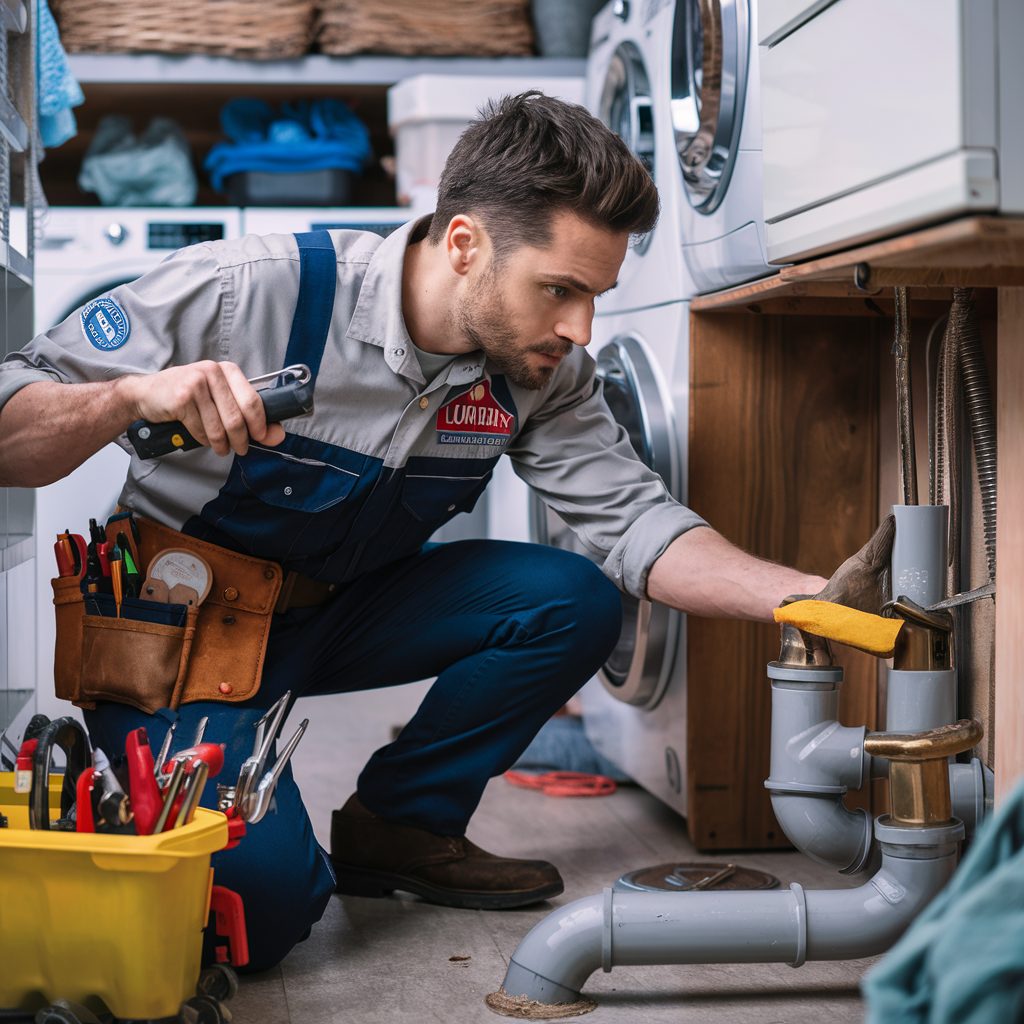
You should definitely consider calling a professional plumber if you notice any of the following warning signs:
- The sewer smell lingers persistently in your home, even after you’ve attempted multiple DIY fixes.
- You observe wastewater or sewage backing up into your sinks, bathtubs, or other areas of your home.
- The source of the problem seems to be located in the main sewer line—something that typically requires specialized tools and expertise to diagnose and repair.
- There are visible signs of water damage or mold growth, which may indicate a more serious plumbing or structural issue.
In such cases, a licensed plumber is your best option. They have the skills and equipment needed to thoroughly inspect your drains, pipes, and water systems, pinpoint the problem, and carry out the necessary repairs safely and efficiently. Ignoring these signs can lead to further damage and greater expense down the road, so it’s better to act early if DIY efforts don’t resolve the issue.
Preventing Future Sewer Smells
Once you’ve eliminated the source of the odor, the next step is to ensure it doesn’t come back. The most effective way to keep your laundry room smelling fresh and clean is by staying consistent with regular maintenance. Prevention is always easier—and cheaper—than dealing with a recurring sewer-like smell. If you’re determined to stop asking why does my laundry room smell like a sewer, follow these simple upkeep tips.
Maintenance Recommendations
Monthly: Run a hot water cycle through your washing machine without clothes. This helps eliminate mold, mildew, and detergent residue that can accumulate over time.
Every Few Months: Use a mix of baking soda and vinegar to flush out your drains. This natural combination helps prevent minor clogs and neutralizes odors before they spread.
Seasonally: Check your ventilation system for blockages or dust buildup. Ensuring air flows freely will minimize moisture retention and odor buildup.
Checklist:
- Clean your drains regularly to prevent blockages.
- Keep the washing machine interior and hoses free of buildup.
- Ensure your laundry room’s ventilation is functioning properly and not obstructed.
Proactive Monitoring
Be alert to the early signs of plumbing issues. For instance, if you notice that water is draining more slowly in your shower or sinks, it could be an early warning of a developing blockage. Catching these issues early allows you to resolve them before they turn into larger, more expensive problems.
By following these preventive measures, you can maintain a consistently fresh laundry room environment—and stop worrying about lingering sewer odors.
Frequently Asked Questions (FAQs)
How does heavy rainfall cause a sewage odor in my laundry room?
During heavy rains, the increased water pressure in your plumbing system can push sewer gases back up through the drains and into your home. This is a common reason why does my laundry room smell like a sewer during or after storms.
Can laundry detergent contribute to the sewer smell?
Indirectly, yes. While detergent itself doesn’t smell bad, excess residue from frequent use—especially when not rinsed properly—can build up in hoses and compartments. Over time, this residue can develop a musty, sour odor.
What should I do if my washer smells bad?
Start by cleaning the inside of the drum with a damp cloth. Remove and wash the detergent drawer, then run a hot water cycle with either white vinegar or a washing machine cleaner to eliminate any hidden mold or buildup.
How often should I clean the washing machine and drains?
To keep odors at bay, clean your washing machine once a month. For drains, it’s recommended to flush them with a baking soda and vinegar solution every few months to prevent clogs and bad smells.
Can bleach remove the sewer smell?
Yes, bleach is effective at killing bacteria and neutralizing odors. However, use it sparingly. Excessive use over time can corrode pipes and cause more plumbing issues.
Conclusion
Sewer odors in your laundry room are unpleasant, but the good news is they’re usually fixable. Whether the culprit is a clogged drain, poor ventilation, or a dirty washing machine, identifying the issue early is key. Once you understand why does my laundry room smell like a sewer, you can take targeted action to eliminate the smell and prevent it from coming back.
With the tips and strategies shared in this guide, you can refresh your laundry space and maintain a clean, healthy environment. Don’t let foul odors take over your home—take control, enjoy a fresher atmosphere, and even save money in the long run with these practical solutions.
