
How Big Should a Laundry Room Be? My Expert Guide to Choosing the Right Size

Through my experience working with clients and helping them design efficient and functional living spaces, I’ve noticed a recurring oversight—many people tend to underestimate the importance of the laundry room. It’s often seen as a minor detail, but in reality, the dimensions and layout of your laundry room can significantly impact your everyday routine. When this space is well-planned, it not only saves time but also reduces the stress typically associated with doing laundry, making laundry day feel far less like a chore and more like a smooth part of your schedule.
In this guide, I’ll walk you through three essential aspects: how to determine the right size of your laundry room, smart ways to make the most out of smaller areas, and common laundry room design mistakes you’ll want to avoid. Whether you’re building from scratch, remodeling, or simply upgrading, these practical tips will help you create a space that is both efficient and enjoyable to use.
Why the Size of Your Laundry Room Matters
You might find yourself wondering, “Do the dimensions of the laundry room in my home really matter?” The answer is absolutely yes. In fact, the size of your laundry room plays a crucial role in how comfortable and efficient the space feels when you’re using it. It’s not just about squeezing in your washer and dryer—it’s also about how easily you can move around the room, handle your laundry tasks, fold clothes without feeling cramped, and access storage for your supplies without frustration. The goal is to make the space work for you, not against you, and that starts with getting the size just right for your needs.
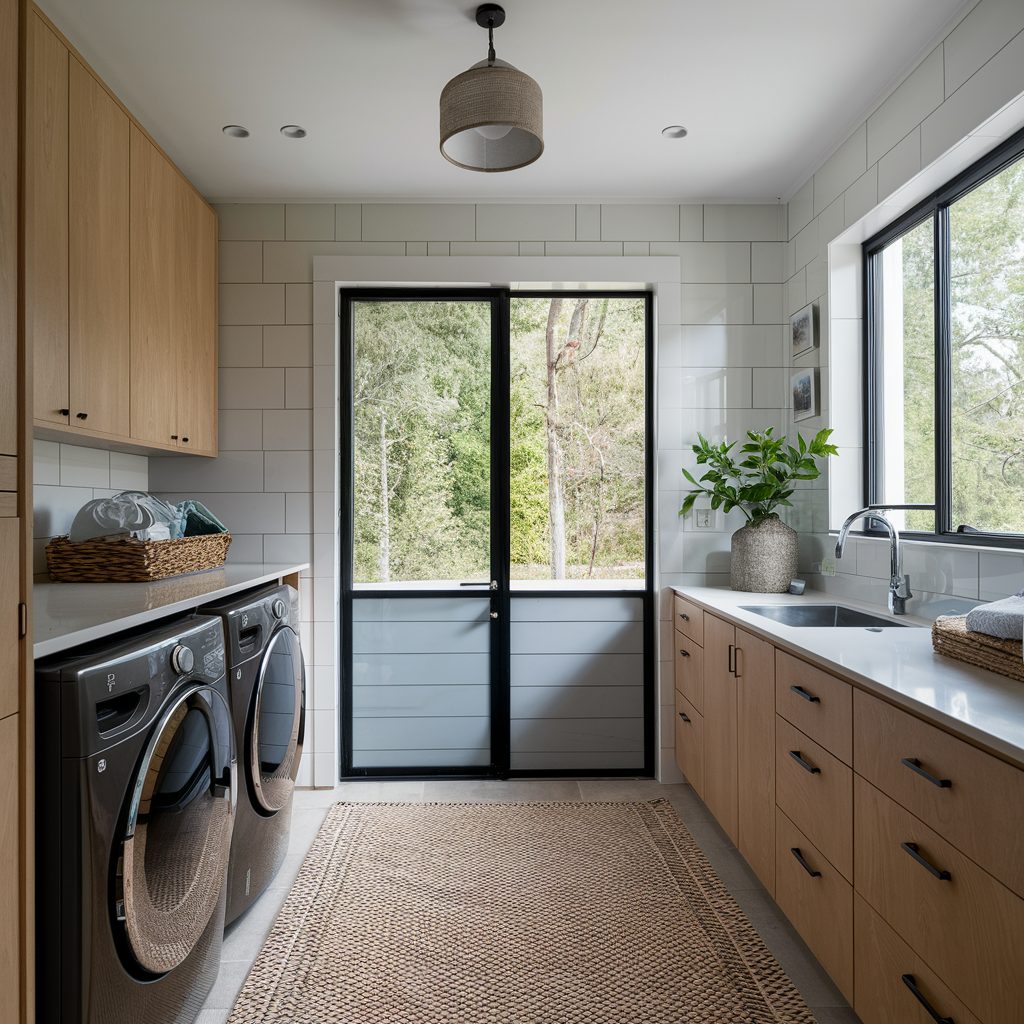
A poorly organized laundry room can lead to several everyday inconveniences, such as:
- Difficulty opening the doors of your washer and dryer due to cramped space, which can make loading and unloading clothes unnecessarily frustrating.
- A lack of essential storage options for laundry supplies like detergents, fabric softeners, and baskets, leading to clutter and disorganization.
- Inability to complete tasks efficiently, such as sorting laundry, folding clothes, or treating stains, simply because there isn’t enough surface or floor space.
When your laundry room is designed with the right dimensions and positioned in a convenient location, these issues disappear. I’m telling you—having enough room for your appliances, adequate storage, and dedicated work zones will dramatically improve the functionality and ease of your laundry tasks.
Determining the Right Size for Your Laundry Room
There’s no universal or one-size-fits-all answer when it comes to determining the perfect measurements for a laundry room. Every home and family has different needs, so what works for one household might not be ideal for another. The most suitable size for your laundry room depends on a variety of practical factors that influence how much space you actually require.
Here are some of the key considerations that will help guide you in choosing the right laundry room dimensions:
Household Size and Laundry Volume
If you’re part of a large household, chances are you’ll require a more spacious laundry area to comfortably manage and organize the frequent loads of laundry that come with multiple family members. A bigger room allows you to store baskets, sort clothes more easily, and keep all your cleaning supplies within reach without feeling cramped.
On the flip side, if you live alone or with just one other person, a smaller and more compact laundry room can still meet all your needs. With a smart layout and efficient use of space, even a limited area can handle regular laundry tasks without sacrificing functionality or convenience.
Appliance Size and Type
Front-loading machines are often considered one of the better layout choices for a laundry room, especially if you’re working with limited space. However, they do require careful planning. These machines tend to extend outward when the doors are open, which can make it challenging to install countertops directly above them for folding or storage purposes.
Top-loading washers, on the other hand, need plenty of vertical clearance to open the lid fully. This can limit your shelving options above the machine, as shelves or cabinets placed too low will interfere with usability.
If you’re dealing with a particularly tight space, one of the most efficient solutions is to opt for a stackable washer and dryer set. Stacking the units vertically frees up valuable floor space, allowing room for other essential features like storage cabinets, folding areas, or even a compact sink.
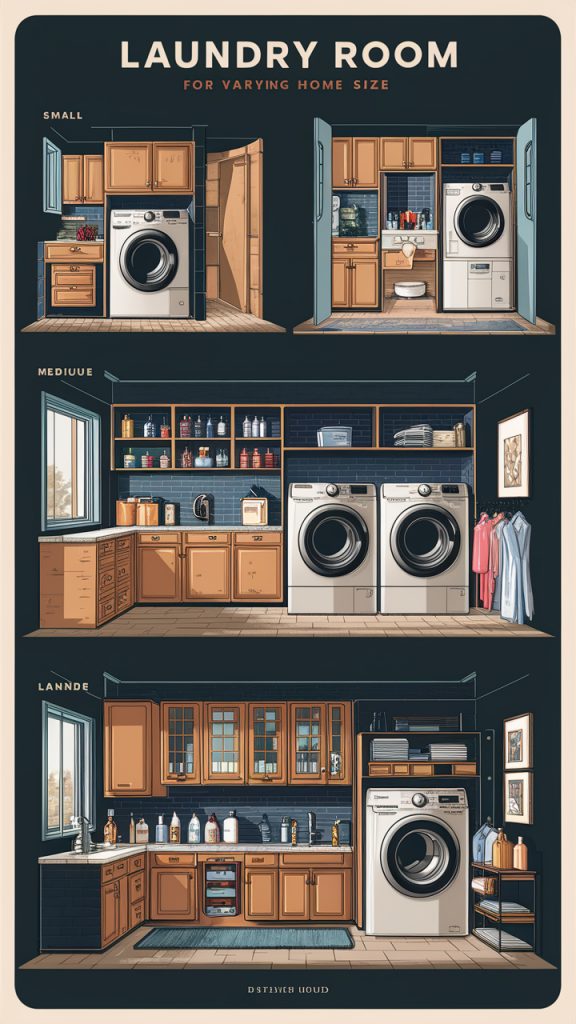
Table: Common Laundry Room Sizes by Home Type
| Home Type | Suggested Laundry Room Size (Sq Ft) |
|---|---|
| Small Apartment | 35-50 |
| Medium Home | 50-70 |
| Large Home | 70-100 |
Multi-Use Functionality
Is your laundry room meant solely for washing clothes, or do you also plan to carry out additional tasks in the same space? For many homeowners, a laundry room has evolved into a multifunctional area that serves more than just its basic purpose. Depending on your lifestyle, you might want to incorporate:
- A utility sink, ideal for hand-washing delicate fabrics or cleaning up messier items.
- A folding station, providing a dedicated surface to handle clothes immediately after drying.
- A pet washing zone, useful for grooming small pets without taking over the bathroom.
Including these features not only adds convenience but also increases the space requirements. Just a few years ago, a laundry room measuring around 40 to 70 square feet was typically enough to accommodate a washer, dryer, and some basic storage. However, today’s multifunctional laundry rooms often need at least 90 square feet or more to comfortably fit these extra features without feeling cramped.
How to Maximize Small Laundry Rooms
It’s a common reality that many homeowners, particularly those living in urban or suburban areas, don’t have the luxury of a large laundry room. Space is often limited, which can make it challenging to design a fully functional area.
However, with a bit of creativity and smart planning, even a small laundry room can be transformed into a highly efficient and organized space. It all comes down to using clever design strategies that help you get the most out of every square inch.
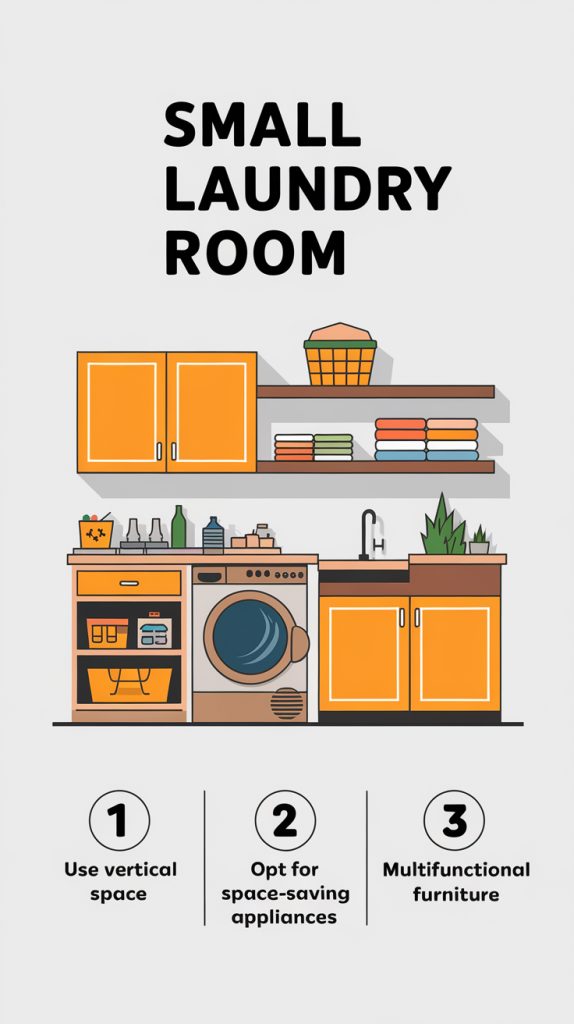
Use Vertical Space
When space is at a premium, thinking vertically is one of the smartest strategies you can use. By utilizing the height of your walls, you can significantly increase your storage capacity without taking up additional floor space. Installing shelves or cabinets above your washer and dryer allows you to neatly store detergents, fabric softeners, cleaning products, and other laundry necessities, keeping them accessible yet out of the way.
- A wall-mounted drying rack is a compact solution that frees up valuable floor area.
- Hanging rods provide a designated spot to air-dry clothing without cluttering up the room.
Opt for Space-Saving Appliances
Whenever possible, go for stackable washer and dryer units. These appliances are perfect for smaller laundry rooms because they occupy a vertical footprint rather than spreading out horizontally. This opens up more room beside or below the machines, where you can install storage cabinets or a small folding station.
Multifunctional Furniture
Clever furniture choices can make a big difference in how usable your laundry room feels. Consider items like wall-mounted ironing boards that fold away when not in use or collapsible drying racks that can be tucked out of sight. These types of space-saving solutions not only help you stay organized but also create the impression of a larger, more open room.
Common Laundry Room Mistakes to Avoid
Over the years, I’ve observed plenty of common laundry room design mistakes—many of which are surprisingly easy to fix with just a bit of planning. Here’s a breakdown of some frequent errors that can negatively impact the function of your space:
- Door Clearance Oversight: One major issue is not accounting for the full swing of washer or dryer doors. This is especially problematic with front-loading machines. Make sure there’s enough room for doors to open completely and that all entryways within the laundry room remain easily accessible.
- Lack of Ventilation: Proper air circulation is crucial in any laundry room. Without it, you’re likely to face issues like humidity buildup and mildew. Consider installing an exhaust fan or, if possible, choose a room with a window to allow for natural airflow.
- Poor Lighting: Dim or uneven lighting can make laundry tasks unnecessarily difficult. Equip your space with a combination of bright overhead lighting and task-specific lights to improve visibility and comfort.
- Insufficient Storage: A well-functioning laundry room needs ample storage for supplies such as detergent, fabric softener, baskets, and cleaning items. Don’t overlook vertical space—use high shelves or upper cabinets to your advantage and keep your surfaces clutter-free.
Conclusion
Ultimately, the size of your laundry room should reflect your household needs, the type of appliances you use, and how you plan to utilize the space. Whether you’re working with a compact area that prioritizes basic functionality or designing a larger room with added features like folding stations and extra storage, the key is thoughtful planning. When you take time to design with purpose, you’ll end up with a laundry room that not only fits your lifestyle but also makes your daily routine a lot more manageable.
Always remember, it’s not just about creating a laundry room that’s large—it also needs to be functional and well thought out. Spend a bit of time planning how you’ll actually use the space. Consider everything from appliance placement to storage, movement, and lighting. When you approach it with intention, you’ll end up with a laundry room that genuinely supports your routine, rather than adding to your stress.
Not sure where to begin? Check out some of my other posts for helpful advice on saving space and choosing the best laundry machines tailored to your room size and setup.
FAQs
What’s the minimum size for a functional laundry room?
A laundry room that ranges from 35 to 50 square feet can be perfectly functional when designed with the essentials in mind. However, if you plan to include additional elements like folding stations, more cabinets, or a utility sink, it’s better to aim for a size between 70 to 100 square feet.
Can I set a washer and dryer in a closet?
Absolutely! This is actually a very common solution in many homes. Just make sure the closet is well-ventilated and that there’s enough space to easily open and use the appliances without restriction.
How do I protect my laundry room from moisture?
Proper ventilation is key. Installing an exhaust fan or choosing a room with a window can help circulate air and prevent humidity from building up. This reduces the risk of mold and mildew over time.
What’s the best layout for a small laundry room?
For narrow spaces, a galley-style layout works exceptionally well—placing appliances on one side and storage units on the other. You can also maximize vertical space by installing hanging shelves, wall hooks, or slim cabinets to keep everything organized.
